
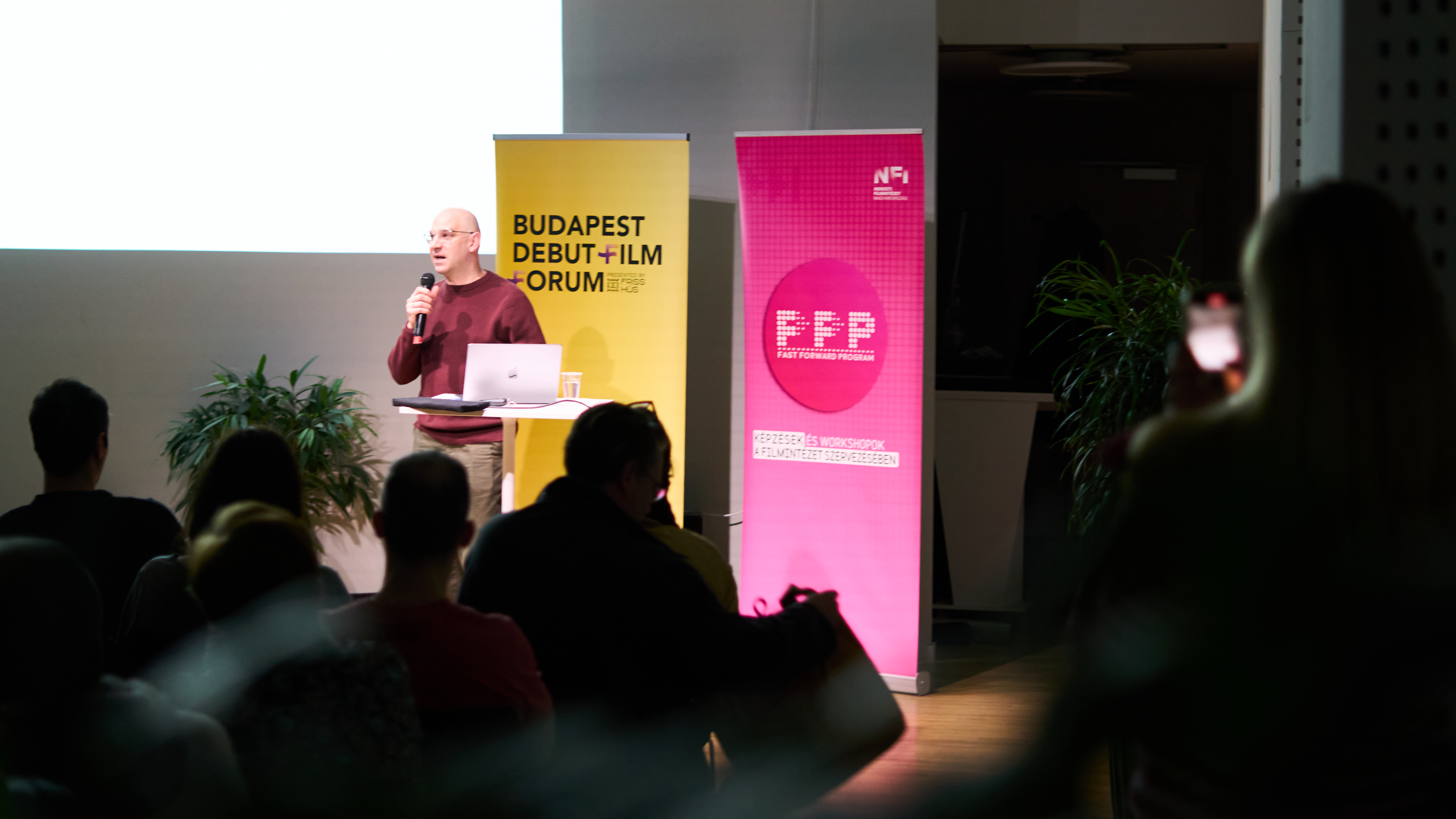
The program of the second day of BDFF concluded with a particularly engaging presentation: Benjamin Cölle, founder and head of Pluto Film, spoke about the method of Audience Design. At first glance, the concept might sound like a marketing term, but in reality it is much more a way of thinking. It is an early sensitivity to the cultural space in which a film will exist and to the audience it will eventually address.
Cölle began his presentation with a fairly simple observation: filmmakers often start thinking about the audience only once the film is already finished. Many films presented at festivals ultimately continue to live only within a narrow professional circle and never reach a wider audience. According to Cölle, the problem is not the lack of good films, but rather the lack of thinking about who will actually go to see them in the cinema.
At this point it is important to emphasize that Audience Design is not a compromise made at the expense of artistic freedom. Cölle stressed that the goal is not for films to immediately adapt to the tastes of the audience. Instead, it is about filmmakers understanding the cultural environment in which their work is created and the communities for whom its message may resonate.
One of the most interesting points of the presentation was Cölle’s observation that the film industry still holds the misconception that the audience is a homogeneous mass that can be addressed in the same way. Yet media studies since the 1960s have made it clear that viewers come from diverse groups with different motivations and cultural backgrounds. In short, a film critic, a shop assistant, an engineering student, and a retiree all enter the cinema with very different expectations. Audience Design attempts to map this diversity: it identifies specific audience groups and examines how a relationship can be built with them.
The presentation demonstrated how the method works through three case studies. The example of The Ship showed how audience mapping can already become connected to a film’s life cycle during development, even if the film itself is never ultimately made. In the case of Tel Aviv on Fire, a new distribution strategy was built around the completed film, which eventually led to successful theatrical releases in several countries. For Victim, Audience Design applied during the picture lock phase helped create a shared language among the filmmakers. In another example, Cölle mentioned that the method was even able to reveal new perspectives for creative partners who had been working together for a long time: during an Audience Design workshop, it turned out that the producer and the director had quite different interpretations of the film’s meaning.
Audience Design is therefore not only about distribution; it can structure the entire creative process. It can help clarify the message of the story, shape communication strategies, and even influence the design of creative materials such as the poster. If this thinking begins early enough, a film can start building its community even before its premiere.
At the end of the evening, Cölle summarized the essence of his talk with a simple thought: as filmmakers, we should think about the people for whom the film is being made and take them seriously. Cinema is not only an art form, it is also a relationship between the creator and the audience. And every relationship begins with an introduction.
Benjamin and Daniela Cölle will hold an Audience Design workshop for BDFF participants on the third day of the 2026 forum.
Photos: Dániel Fehér